
Software Engineering
The Software Engineering programme was launched at ITMM in 2015 in response to the growing demand for specialists skilled in software development and…
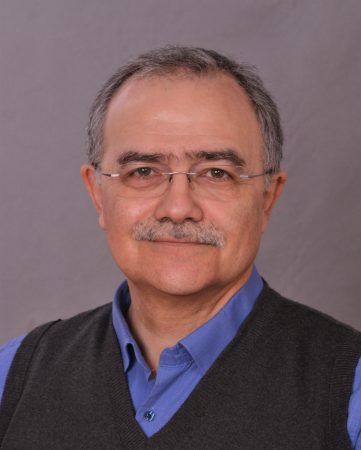
Dmitry Evgenievich Shaposhnikov
Candidate of Physical and Mathematical Sciences, Associate Professor of the Department of Software and Supercomputing Technologies, Institute of Information Technology, Mathematics and Mechanics
Faculty profile →About the programme
The Software Engineering programme was launched at ITMM in 2015 in response to the growing demand for specialists skilled in software development and management of large IT projects. It trains qualified professionals in modern industrial technologies for developing large-scale software. Graduates can work as product developers, systems analysts, backend and frontend developers, QA engineers, product managers, data analysts and other specialists of the digital industry. Students receive fundamental training in mathematics and computer science and study modern information technologies, engineering approaches to software development and methods of maintaining information systems. The programme also includes a management block that helps graduates design software products, manage projects and work with requirements, documentation, quality and the software life cycle. Students learn current programming languages and technologies — C/C++, Python, Java, JavaScript, C# — as well as frameworks and tools for QA engineers, frontend and backend developers, mobile and web developers and DevOps engineers. To keep practical skills up to date, the institute actively cooperates with IT companies: their staff give lectures, run seminars, supervise student projects and help students work on real industrial problems. Since 2024 the programme has included backend and frontend development modules designed by Yandex experts.
What will I study?
The programme includes a fundamental block in mathematics and computer science, professional software engineering courses, project work, development management and high-performance computing.
Core knowledge 10
- Programming Fundamentals
- algorithms and data structures
- higher mathematics
- probability theory and mathematical statistics
- optimisation methods
- mathematical logic and theory of algorithms
- operating systems
- numerical methods
- database technologies
- computer architecture
Professional courses 10
- Software Engineering Economics
- software project management
- software documentation
- design and architecture of software systems
- human–computer interface design
- requirements engineering and analysis
- software testing
- programming tools
- telecommunication systems management
- project work in software engineering
High-performance computing 2
- Parallel Programming for Shared-Memory Systems
- parallel programming for cluster systems
Programme focus
Core knowledge
Programming Fundamentals, Algorithms and Data Structures, Higher Mathematics, Probability Theory and Mathematical Statistics
Professional courses
Software Engineering Economics, Software Project Management, Software Documentation, Design and Architecture of Software Systems
High-performance computing
Parallel Programming for Shared-Memory Systems, Parallel Programming for Cluster Systems
Internship
Internships are organised with the programme’s industry partners.
Partners include GLOBUS-IT, NEOFLEX, LAD-IT, April IT-Project, Konstanta and other companies.
Career paths
Software engineer
Writes code, designs services and takes part in the full cycle of building a software product.
Systems analyst
Defines requirements, describes system scenarios and supports the development team.
QA engineer
Checks product quality, designs tests and helps release reliable systems.
Where can I work?
Entrance exams
Russian language
Minimum score — 40
Mathematics
Minimum score — 40
Computer Science
Minimum score — 46
Apply now
Follow the button to the UNN Admissions Office website: deadlines, documents, admission rules and up-to-date information for applicants.